Introduction: Why CEOs Trust Formulas, Not Feelings
In the corporate world, no serious CEO runs a company based on instinct alone. Decisions are supported by data, models, forecasts, and formulas that translate complexity into clarity. Investing, however, is an area where many intelligent people abandon structure and rely on emotion, headlines, or speculation. From a CEO’s perspective, this is not only inefficient—it is dangerous.
Profiting from investing does not require prediction or luck. It requires systems. Formulas, when applied correctly, are tools that transform uncertainty into probability and discipline into consistency. They do not eliminate risk, but they allow leaders to understand, price, and manage it.
This article explores investing through a CEO lens: how formulas are used not as shortcuts to wealth, but as frameworks for rational decision-making. It explains why formulas matter, how they guide capital allocation, and how disciplined investors use them to profit over time.
1. The CEO Mindset: Investing as Capital Allocation
CEOs view investing as capital allocation, not gambling. Every dollar deployed has an opportunity cost. The goal is not excitement, but efficiency and sustainability.
Formulas support this mindset by creating objective standards. They force investors to define assumptions, measure performance, and compare alternatives. Instead of asking, “Will this investment go up?” a CEO asks, “Does this investment meet my required return given its risk?”
This shift in thinking is foundational. Profitable investing begins with structured evaluation, not optimism.
2. Why Formulas Matter in Investing
Formulas exist to reduce bias. Human judgment is powerful, but it is also flawed. Fear, greed, overconfidence, and recency bias distort perception.
Formulas introduce consistency. They apply the same logic across different scenarios, regardless of emotion. CEOs rely on formulas because they scale decision-making and protect against impulsive behavior.
In investing, formulas help answer critical questions:
- What is this asset worth?
- What return can I reasonably expect?
- How much risk am I taking?
- Is this investment superior to alternatives?
Without formulas, these questions are answered emotionally. With formulas, they are answered strategically.
3. Return on Investment (ROI): The Starting Point
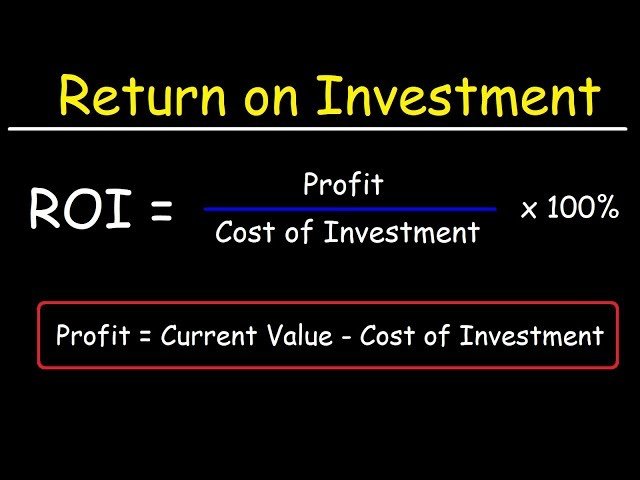
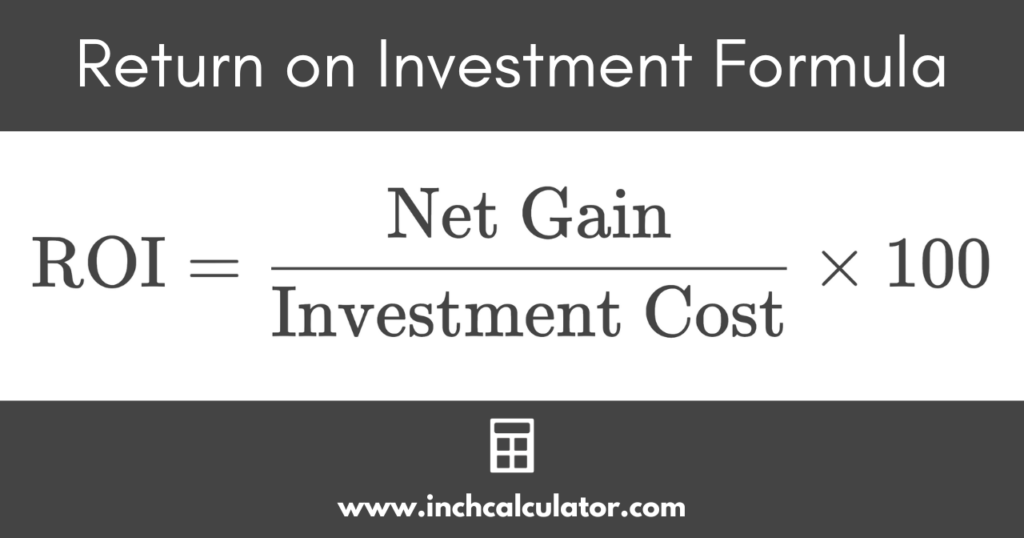
One of the most fundamental formulas in investing is Return on Investment. CEOs use ROI to evaluate projects, acquisitions, and strategic initiatives.
ROI compares the gain from an investment to its cost. While simple, it provides immediate insight into efficiency. In investing, ROI helps determine whether capital is being rewarded appropriately.
However, CEOs understand that ROI alone is insufficient. It does not account for time, risk, or sustainability. Still, it serves as a baseline filter—investments that fail basic ROI logic rarely succeed long term.
4. Time Value of Money: Respecting Time as a Variable
CEOs respect time because delayed results have consequences. The time value of money formula reflects this reality by recognizing that money today is worth more than money tomorrow.
Discounting future cash flows allows investors to compare opportunities across different time horizons. This approach is central to valuation and long-term investing.
Profitable investors use time-based formulas to avoid being misled by large future promises that look attractive but deliver poor present value.
5. Compound Growth: The Formula CEOs Rely On Most
Compounding is not just a financial concept—it is a strategic principle. CEOs see compounding in talent development, brand equity, and organizational culture.
In investing, compound growth explains why consistency outperforms intensity. Reinvested returns generate exponential outcomes over long periods.
CEOs who profit from investing design strategies that maximize compounding by minimizing unnecessary interruptions such as emotional trading, excessive fees, and frequent speculation.
6. Risk-Adjusted Return: Profit With Perspective
Profit without context is meaningless. CEOs evaluate performance relative to risk.
Risk-adjusted return formulas compare returns to volatility or downside exposure. They help determine whether profits are earned efficiently or recklessly.
From a CEO’s perspective, the best investment is not the one with the highest return, but the one with the most reliable return relative to risk taken.
7. Margin of Safety: A Formula for Survival
CEOs prioritize survival before growth. In investing, this philosophy is reflected in the concept of margin of safety.
By demanding a buffer between price and intrinsic value, investors protect themselves against error and uncertainty. This approach acknowledges that formulas are estimates, not guarantees.
Margin of safety is not pessimism—it is disciplined humility.
8. Probability Thinking and Expected Value
CEOs think in probabilities, not certainties. Expected value formulas combine potential outcomes with their likelihoods.
This approach reframes investing decisions. Instead of focusing on best-case scenarios, CEOs evaluate weighted outcomes.
Investments with positive expected value, repeated consistently, lead to long-term profitability—even if individual outcomes vary.
9. Position Sizing: How Much Matters as Much as What
One of the most overlooked formulas in investing relates to position sizing. CEOs understand that even good decisions can cause damage if scaled improperly.
Position sizing formulas help determine how much capital to allocate to a given investment relative to risk.
This discipline prevents single decisions from threatening overall strategy. Profitability is preserved through balance, not concentration alone.
10. Diversification: Formula-Based Risk Reduction
Diversification is not random spreading—it is calculated risk reduction.
CEOs diversify businesses, revenue streams, and leadership pipelines. Investors diversify assets, sectors, and geographies.
Formulas measuring correlation help ensure diversification is real, not superficial. True diversification reduces volatility without sacrificing long-term return.
11. Valuation Formulas and Rational Pricing
CEOs would never acquire a company without valuation analysis. The same discipline applies to investing.
Valuation formulas estimate what an asset is worth based on cash flow, growth, and risk assumptions.
Profitable investors do not buy excitement; they buy value relative to price. Valuation creates discipline and prevents overpayment.
12. The Cost Formula: Fees, Taxes, and Friction
CEOs obsess over efficiency because small inefficiencies compound.
In investing, costs silently destroy profit. Fees, taxes, and transaction friction reduce returns regardless of performance.
Formula-based analysis reveals the long-term impact of seemingly minor costs. CEOs profit by minimizing what does not create value.
13. Behavioral Formulas: Designing Around Human Error
CEOs design systems that assume human imperfection. Investing formulas serve the same purpose.
Rules-based investing reduces emotional interference. By predefining entry, exit, and allocation criteria, investors protect themselves from impulsive decisions.
Behavioral discipline, reinforced by formulas, is a hidden driver of long-term profit.
14. Monitoring, Feedback, and Continuous Adjustment
Formulas are not static. CEOs review performance, test assumptions, and refine models.
Monitoring investment results against expectations reveals whether formulas remain valid. Adjustments are made strategically, not reactively.
This feedback loop transforms investing into a continuous improvement process.
15. Formulas Do Not Replace Judgment—They Support It
CEOs understand that formulas are tools, not substitutes for leadership.
Judgment interprets results, considers context, and accounts for qualitative factors. Formulas provide structure, but wisdom applies it.
Profitable investing balances quantitative rigor with strategic insight.
Conclusion: Profiting Through Structure, Not Speculation
Investing profitably is not about secret formulas or shortcuts. It is about applying the right formulas consistently, rationally, and ethically.
From a CEO’s perspective, formulas transform investing into disciplined capital allocation. They reduce emotional error, clarify decision-making, and support long-term wealth creation.
The most successful investors are not those who predict the future best, but those who manage uncertainty most effectively.
When investing is guided by formulas and led by judgment, profit becomes not an accident, but an outcome of strategy.
Word Count:
786
Summary:
A classic Wall Street yarn, concerning a young man who was in the early stages of learning to be a professional speculator goes something like this. The young man had a problem, so he went to an elderly gentleman noted for his shrewd investment judgment, for advice. The young man had taken on quite an extensive line of stocks, but the market looked a bit over-valued and so he was thinking that his positions carried too many risks. He wondered if he shouldn’t perhaps sell. He …
Keywords:
Article Body:
A classic Wall Street yarn, concerning a young man who was in the early stages of learning to be a professional speculator goes something like this. The young man had a problem, so he went to an elderly gentleman noted for his shrewd investment judgment, for advice. The young man had taken on quite an extensive line of stocks, but the market looked a bit over-valued and so he was thinking that his positions carried too many risks. He wondered if he shouldn’t perhaps sell. He was so worried about it that he was having trouble sleeping.
The old man’s advice was simple and direct: “Sell” he said. “Sell back to the sleeping point.” Although there is no doubt that this advice smacks of ambiguity, there is a simple wisdom in it. We may safely assume that neither the young man nor his elder adviser knew which way the market was going, but both were aware that the market was sufficiently shaky to cause legitimate worry. Translated into somewhat more orthodox investment terms, the advice meant – Sell enough of your stocks so that a market collapse won’t destroy you, but keep enough so that if your fears turn out to be groundless, and the market rises, you’ll still profit to some extent – in the meantime, get some sleep.
At first glance, it may seem a bit cynical on the old man’s part not to outline for his young disciple an exact and detailed course of action. But he couldn’t be honest and at the same time guarantee that he knew exactly what action might turn out to be best. Furthermore, the young man didn’t want someone to tell him precisely what to do. All he wanted was some help in easing the pressure and the help he received was clearly sensible.
How to Find the Sleeping Point
In a real sense, investment formulas are designed to help you in the same way that the old man’s advice helped his young friend – they inject an element of caution in your investing when caution seems advisable, they reduce the provision for caution when risks seem relatively low and permit you to benefit when prices rise. In addition, once you incorporate a formula into your investment program, it works more or less automatically, allowing you to sleep nights in the full knowledge that you are continuously hedged against various unforeseen possibilities.
But just as the investment sage left it up to the young man to decide exactly what his “sleeping point” might be, you can select a formula appropriate to your own temperament, financial circumstances and proclivity to insomnia. Any formula can be adjusted to suit the needs and preferences of any investor.
Although formulas are designed to give un-hedged, unambiguous and unbiased indications for action, the investor should not feel that he is surrendering all personal control over his investments when he adopts a formula. The reason behind this logic is clear. It’s because each investor selects the formula that will fit his own individual comfort level. A formula doesn’t try to tell you what to do – it merely helps you do what you are already doing more profitably. For example, formulas cannot tell you which stocks to buy or currency to trade.
The whole premise of using formulas is based on the fact that those using them are normally quite sophisticated and that they know what kind of investment vehicle they are interested in, how to select them and where to go for advice in their particular area(s) of interest. However, by supplementing their knowledge with considerations of the equally important questions of when to own and in what quantity – formulas can supply a valuable added dimension to their investment results and assist in the management of their portfolio on a more professional level.
Along this same line, it is worth mentioning that although the true purpose of a formula is to supply the investor with an investment policy which is definite in its instructions at all times, you need not feel that you must follow the formula precisely in order to profit from it. You cannot, of course, ignore it altogether if you expect to benefit from it, but you can profitably use it as a touchstone or a general guide without swearing eternal allegiance to its dictates. You might, for example, want to use a formula, but also desire to increase or decrease your risks at various times for a variety of reasons. Your use of the formula will show you how far you are departing from your original plan and will give you a well-ordered program to come back to when you are ready.
This article may be reproduced only in its entirety.



Tinggalkan Balasan